What is social pleasure?

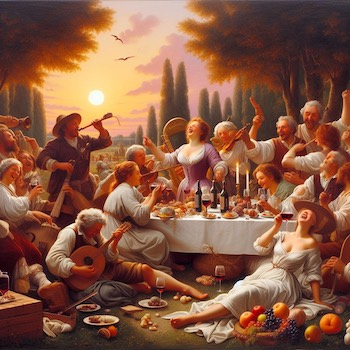
Abstract: The re-hierarchization of oneself is not only beneficial for society. It is also a means of renewing the contrast that keeps our personal experiences of pleasure unforgettable. Don’t end up as aged laboratory humans Are we very different from the laboratory rats who tirelessly press their pleasure pedal, forgetting all other considerations? We have … Read more

A tree falls in the forest

Abstract: A tree falls in a forest, casting doubt on its existence despite the noise produced. Inseparable and unadjustable halves The double look, what is it exactly? Let’s start with a classic riddle: “If a tree falls in an uninhabited forest, does it make a sound?” The answer “Yes, of course!” is not suitable. The … Read more

Equality in the operating room

Abstract: Let’s dissect Equality, which is an ideal and not an ontological principle, to see what we must keep from it: the right to importance, access to knowledge and travel. I explain how the egalitarian ideal tends to vitiate these fundamental principles, particularly in the constitution of expertise in science, confused with scientific research. The … Read more

A consciousness that is too horizontal

Abstract: The hierarchy works poorly because it is represented too horizontally in our minds. Defect inherent in the synthesis carried out in the conscious space. At this level of the neural network, the model flattens a social universe that is actually endowed with vertical complexity. Two mental dimensions In this chapter I use a notion … Read more

Overwhelming ideals

Abstract: Many of our motivations are wrongly considered natural. I take 3 examples: staying healthy, protecting nature, upholding equal rights. Behind them lie artificial ideals: Eternal Life, the Natural History Museum, Democratic Equality. Confused with principles truly constitutive of human nature, these ideals crush with their weight many aspects of our lives. They flatten our … Read more

When does a power have authority?

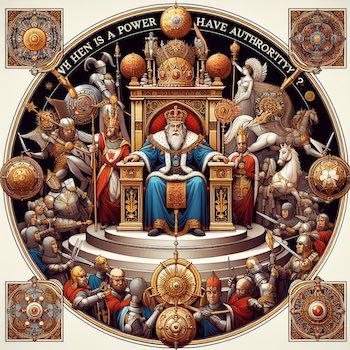
Abstract: Power is a mechanism and authority its acceptable, freely consented form. The complexity of modern societies sees power move away from the base, and therefore lose authority. Rather than destroying collective power to the detriment of one’s own, the only way to escape submission is to increase one’s own authority, through personal re-hierarchization. Power … Read more

Do without hierarchy?

Abstract: The etymology of ‘hierarchy’, the sacred order, remains relevant: there are always laws to which one must submit, if only the natural, new sacraments. I show that the collapse of hierarchies is natural, too, but that this disappearance is disastrous. It is not the hierarchical principle that poses the problem but its dysfunctions, its … Read more

A chancellor and a philosopher debate labor

Abstract: Debate between Olaf Scholz, German Chancellor, and Axel Honneth, philosopher author of ‘Le Souverain au travail’, on the problem of the recognition of work in contemporary society. The interest of the debate is that it is the archetype of dodging the fundamentals of the problem. Social ontology is not even mentioned. Surprisingly, the philosopher … Read more

Is the rise of esotericism and pseudo-science worrying?

Esotericism and the whimsical use of scientific discoveries —French talk of patasciences— are booming commercially. Enough for scientific magazines and news weeklies to look into the subject, with a major dossier in L’Express this week. Should we really worry about it, or is it just a necessary and transitory phase of our social evolution? The … Read more

Ecoterrorism: George Monbiot vs Andreas Malm

Is infrastructure sabotage deemed ecocidal productive or counterproductive? The need to repair the damage at an even greater cost to the planet marks these acts as imbued with crass stupidity. However, before concluding, let’s look at the debate between two ecologists, George Monbiot, British journalist, and Andreas Malm, Swedish geographer author of ‘How to sabotage … Read more