The enigma of time solved

Two schools? No time… Time is one of our most enigmatic root concepts. The difficulty of grasping it has created two clearly divided schools of thought. The first sees time as a simple order of succession. No reference to the present or to an observer. One event is limited to being anterior or subsequent to … Read more

Counterfactual causality, what is the point?

Abstract: A theory of causality, a root concept, must strive to converge its ontological and teleological directions. The counterfactuals used by Paul Noordhof unfortunately failed in this attempt. They form a good description of cognition, highlighting its biases. Going further requires looking at the complex dimension. Part 1: Two-way causal representation Causality is one of … Read more

Explaining evil is not justifying it

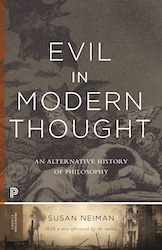
Thinking about evil is not just about burning yourself in it With ‘Evil in modern thought‘, essayist Susan Neiman revisits Nietzsche and Arendt to condemn a resignation from contemporary philosophy about evil. She sees the Holocaust as such an exorbitant evil that it requires a complete overhaul of ethics, not just deconstructing world history. An … Read more

Compare theories of consciousness?

Striking spirit What is immediately striking about the theories of consciousness is that they don’t look alike at all. Of course we group them into major fields, scientific, religious, philosophical, but each group is heterogeneous. Among scientists, disciplines as diverse as neuroscience, complexity, and quantum physics compete for copyrights on consciousness. Every mystic wants to … Read more

Why can’t we confront death face to face?

A question of bumpers? Philomag tackles death that comes in front of us, or that has already hit a loved one, and we can’t overcome the disaster. Generalization hides strong inequalities: some enter a state of mental decomposition and others seem unaffected. Is death an unknown virus? A new vaccine in sight? The Epicurean and … Read more

Non-binarism and anti-binarism

Abstract: Using the example of Theo, who renames herself Thea, I show the important difference between true non-binaries, who are rarely heard, and anti-binaries, ardent militants. What is a non-binary? A non-binary person is a person who does not declare themselves in a female or male gender, as prescribed by the dominant cultural binarism. In … Read more

What is a genius?

“Talent hits a target that no one else can reach; the genius hits a target that no one else can see.”Arthur Schopenhauer Innate and acquired knowledge No one has the time and the means to unravel the history of science. We are forced to take for granted most of the knowledge used on a daily … Read more

Tyrannical quantity

Free yourself from the domination of numbers Numbers are ubiquitous in the contemporary world. If they have had such success, it is because they perfectly model multiple aspects of physical reality. Numbers are a means of dominating matter. This apparent physical universality has rubbed off on our psychology. Social relations are invaded by numbers because … Read more

What is the right interpretation to give to quantum mechanics?

An explanation at all costs? Physicists pay little attention to the interpretation of quantum mechanics on a daily basis. The Standard Model works very well, even to the point that researchers hope for unexpected results from their experiments that would force new theoretical developments. That quantum mechanics is difficult to connect to the macroscopic is … Read more

The principle of relative independence illustrated by the Tetralogue

The principle of relative independence is at the heart of Surimposium, a complete theory of reality. I illustrate this with an excerpt from Timothy Williamson’s Tetralogue, before showing an outlet for the political relationship between rulers and governed. The principle of relative independence How does an individuation declare its independence? You have to look for … Read more