How to Really Solve the Mind-Body Problem (3)

Abstract: The difficulty of the mind-body problem does not come from the brain itself, which is conscious before our eyes, but from the apparent incompatibility between the two ways of looking at it, the physicalist/ontological and the spiritualist/phenomenological. After clarifying the notion of level of explanation, a level that varies according to the authors, I … Read more

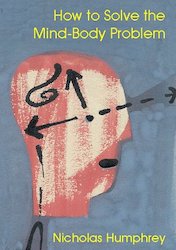
How to Really Solve the Mind-Body Problem (2)

Abstract: Nicholas Humphrey’s solution to the brain-mind problem, discussed in the previous article, is to see sensations as directly experienced activities and not objects of experience. He vigorously separates sensation and perception, the former as a sensible experience and seat of the phenomenon of consciousness, the latter as an interpretation of the external world. What … Read more

How to Really Solve the Mind-Body Problem (1)

Abstract: By supporting the idea of a sharp separation between sensation and perception to solve the mind-body problem, Nicholas Humphrey solves some difficult questions but creates others that are insoluble. It thus opens the door to a more complete solution, which retains the need for a dual view of the problem, without making a summary … Read more

The imperative necessity of oblivion

How would resilience be possible without forgetting? Without forgetting how something presents itself, how could it be overcome? It would present itself to me continuously, daily, the way it has always presented. I would be mired in this eternal present, which has become a past. I would be the ancestor of myself, not my perpetual … Read more

Is reality only made of waves?

Vlatko Vedral, a physicist at Oxford, argues that reality is made only of waves and that the obsolete wave-particle dualism must be completely abandoned. This position is eliminatory reductionism. It denigrates the existence of the complex dimension of reality. I will show how it reintroduces a dualism, that of reality and spirit. The reductionist discourse … Read more

From “if” to “and if”

In the face of the unacceptable, the mind flees into a better world through a series of “if…”. The longer the sequence, the more unreal the new universe. Some people take refuge there and are completely absent from the collective reality. Unsurpassable mourning, mythomania. Why do some find comfort in the imagination, which facilitates reintegration … Read more

How to access reality per se? (1)

What is real? What are our representations about it worth? Philosophy carefully scrutinizes these representations by its various metaphysical branches, but it knows nothing about their overall authenticity. These models could be congratulating each other and seriously mistaken on the reality itself. Is the powerlessness to explain a riddle such as consciousness an indication of … Read more

Unborn black

On the occasion of the death of Pierre Soulages, “researcher of the ultrablack”, Cédric Enjalbert praises “black romanticism”, this sensitivity that allows the shadow part in us to be expressed. He quotes Edmund Burke in his Philosophical Research on the Origin of Our Ideas of the Sublime and the Beautiful, in 1757: “All that is … Read more

Deficiencies in metaphysical vocabulary

Philosophical vocabulary is a real semantic mess! The word is not too strong. It is almost easier to learn a foreign language. Look for example at the word ‘being’; It designates both a phenomenon and a representation. Between ‘I am’ – an unshareable experience – and ‘he is’ – an infinitely divided opinion – there … Read more